
AI slot reel frame generator for a measured five-by-three cabinet

What a reel frame has to do
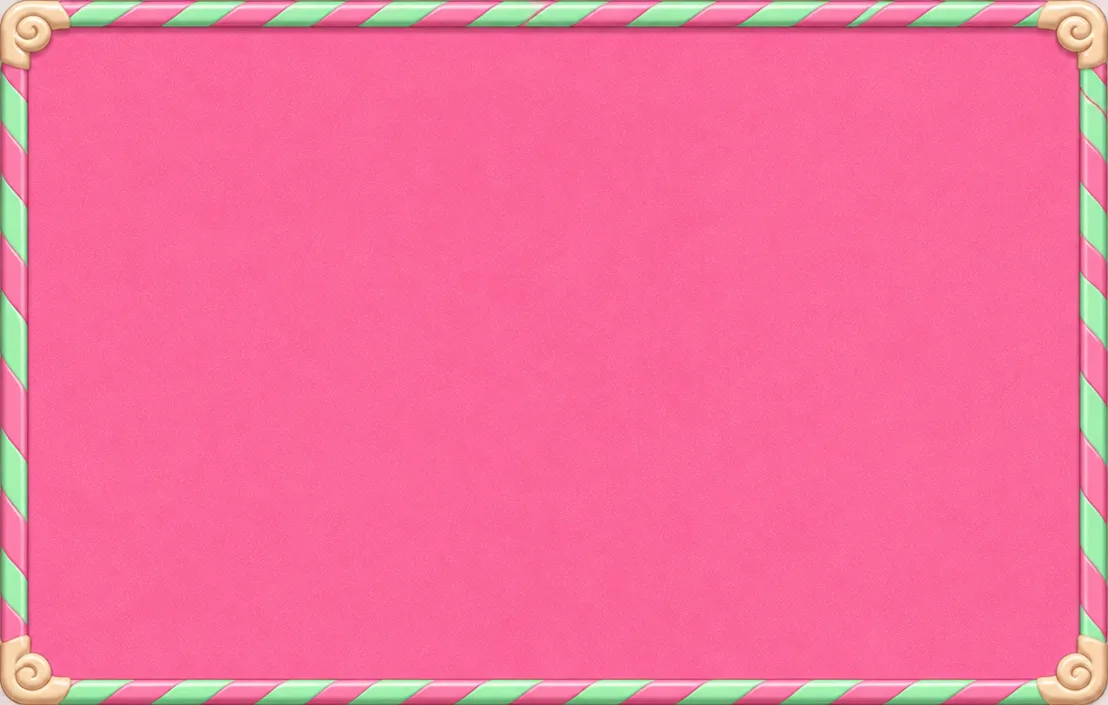
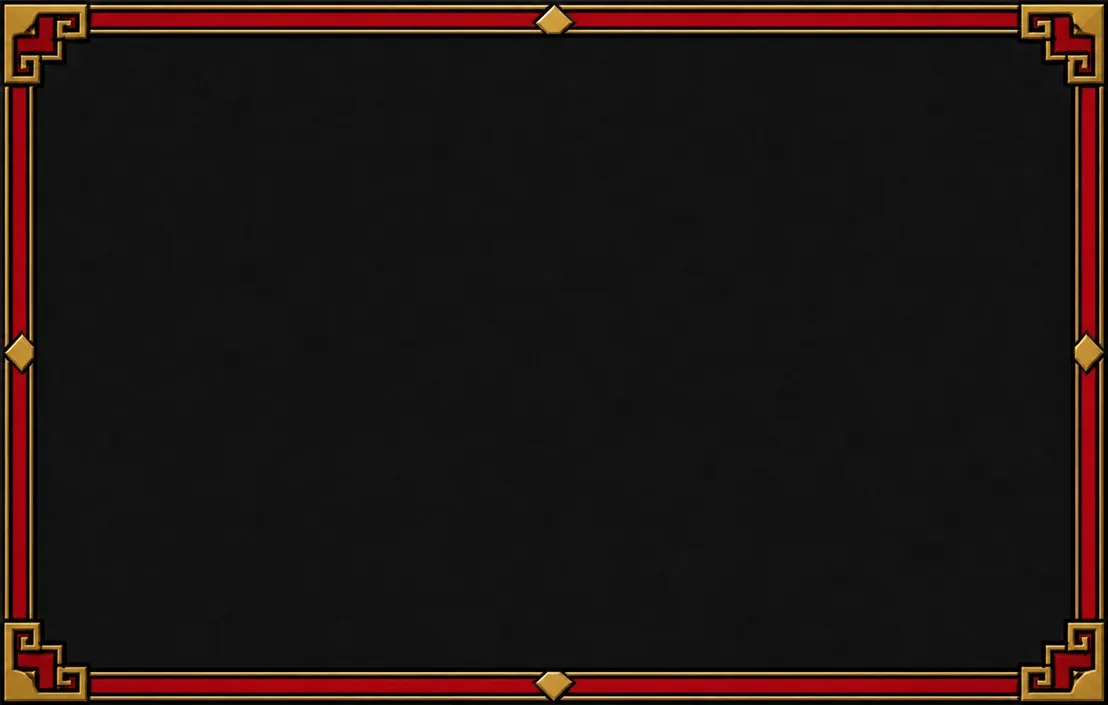
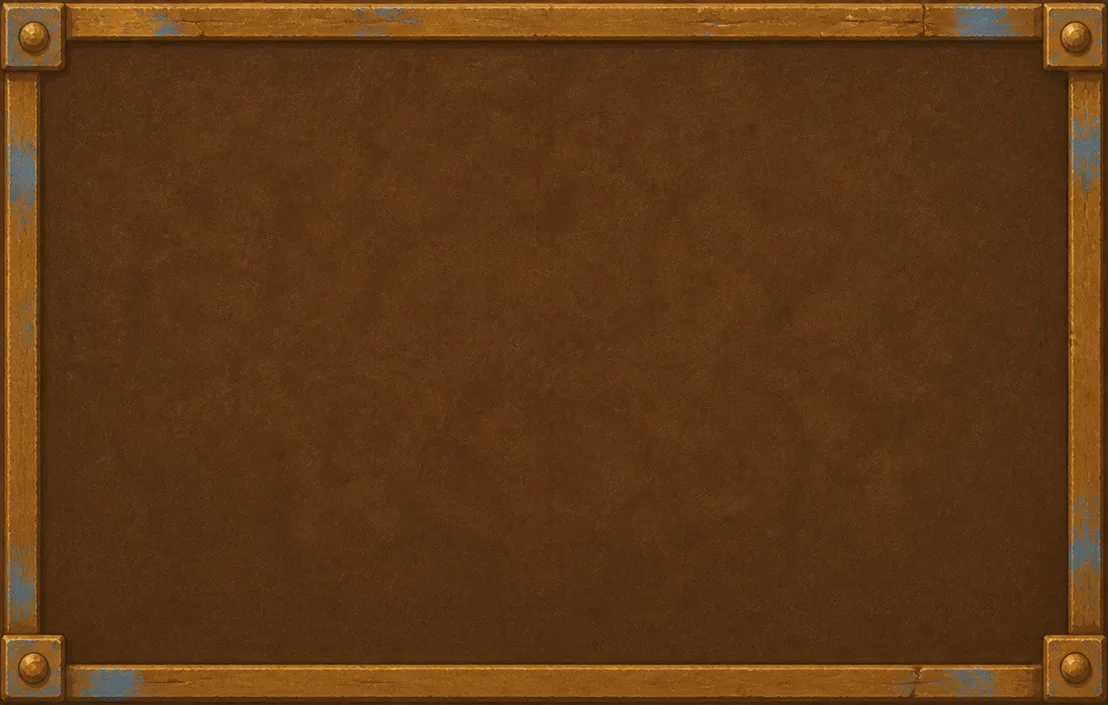
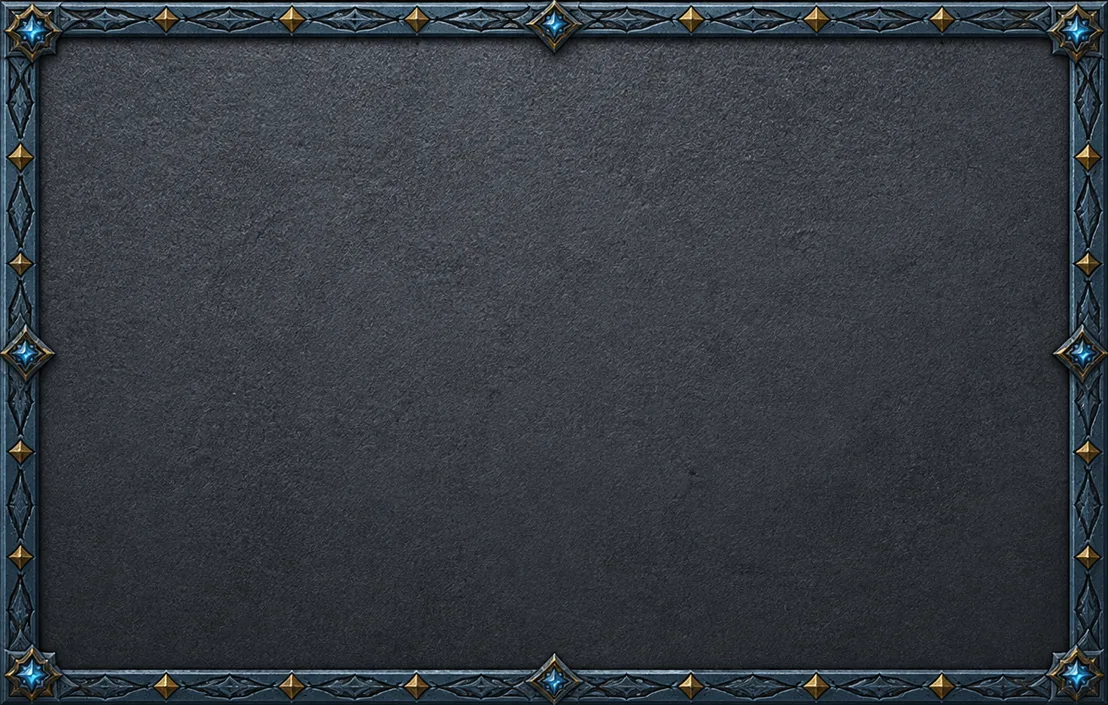
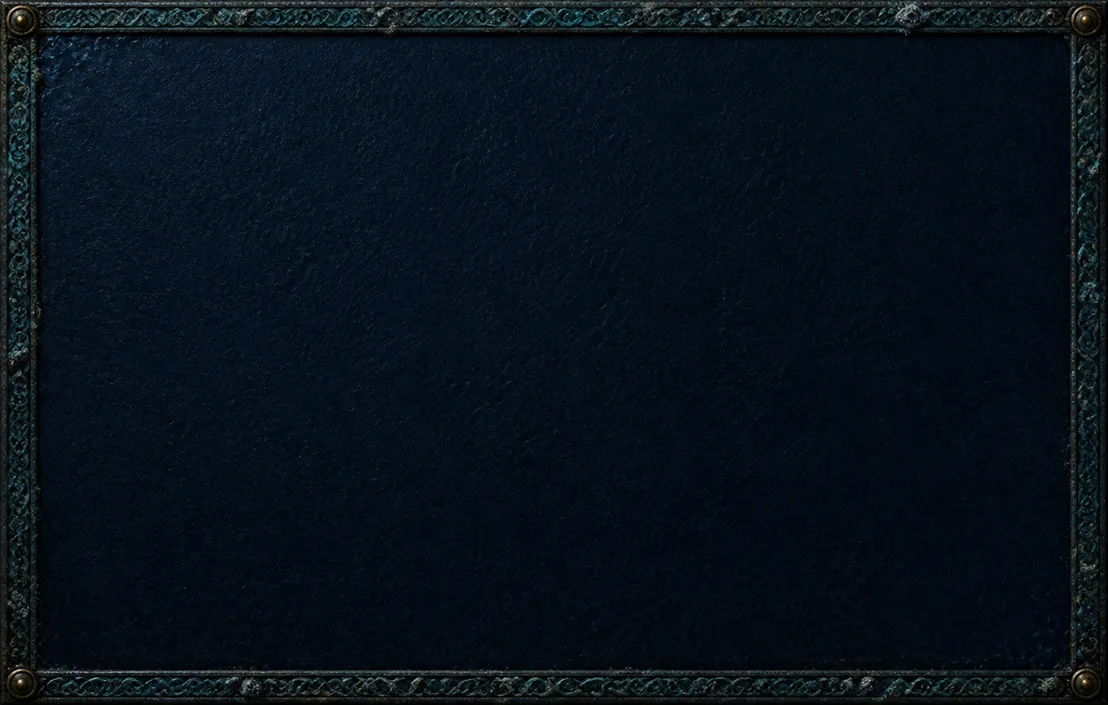
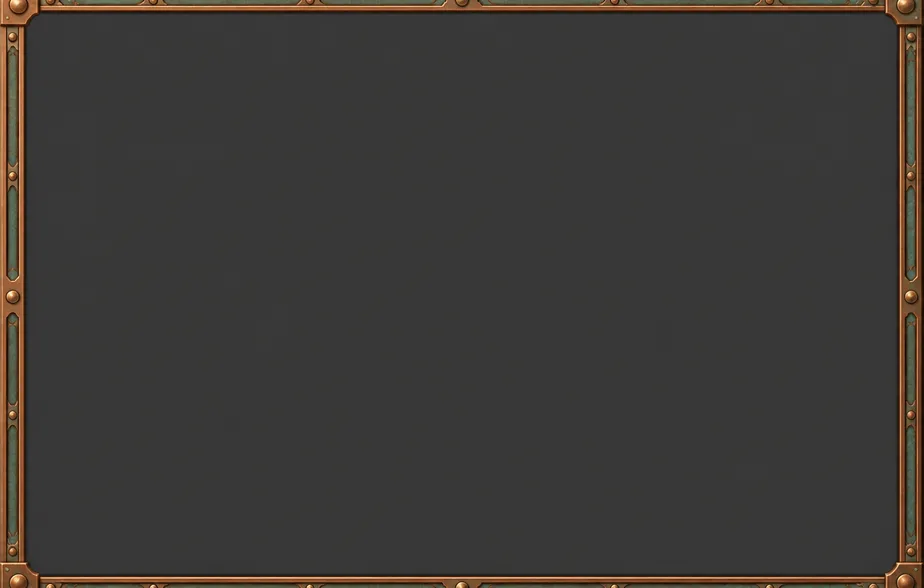
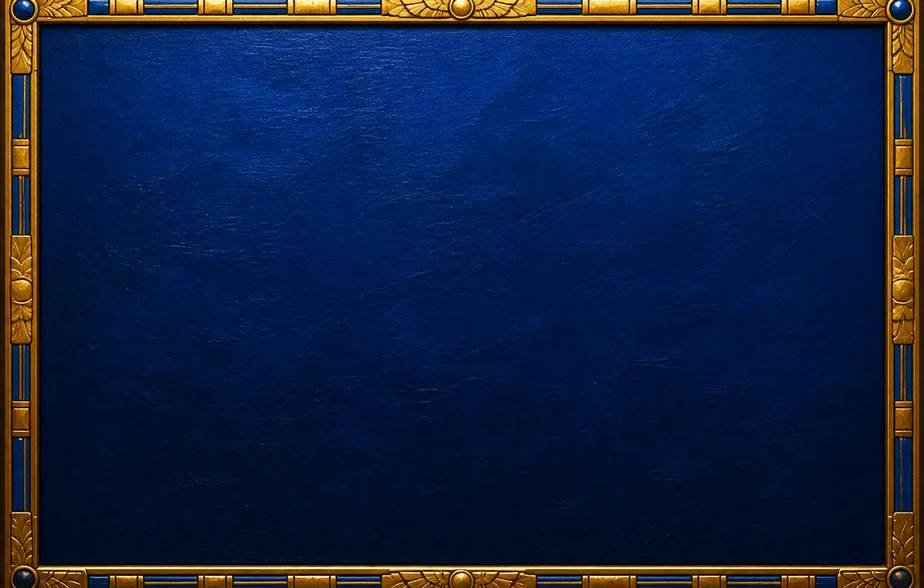
The reel cabinet is the frame around the symbols and the surface behind them. It is the largest single object on a slot screen, and almost everything it does well is a matter of staying out of the symbols' way.
- Hold a square grid. Five reels by three rows of square symbols need an opening of exactly 5:3. A wider opening crops every symbol; a narrower one leaves gaps.
- Keep the panel calm. Every symbol is read against the panel. It should be dark and lightly grained, with no bright patch, sheen streak or gradient across it.
- Keep the rail thin. A heavy frame swallows the screen and hides the background. The rail here is a quarter of one reel cell on every side.
- Scale without distortion. An ornate frame stretched to fit a rectangle turns every round fitting into an ellipse. It has to scale uniformly.
- Leave the background visible. The cabinet sits over the stage at its own size, not across the whole screen.
What the generator delivers
The rail is a quarter of one cell on every side, and that one number fixes the rest. Five cells plus two quarter-cell rails make 5.5 cells across; three cells plus the same rails make 3.5 cells down. The cabinet is therefore 11:7 on every stage.
| Property | Value |
|---|---|
| Opening | 5 cells by 3 cells, exactly 5:3 |
| Rail | 0.25 cell per side, about 4.5% of the cabinet width |
| Overall shape | 5.5 by 3.5 cells, 11:7 |
| Generation canvas | 1408×896 |
| Desktop file | board.png, about 1108×705 on the default stage |
| Phone file | board-mobile.png, the same render at the phone stage's scale |
| Corner ornament | corner.png, 512×512, mirrored into all four stage corners |
The cabinet is opaque and placed at a published board rectangle over the background. After fitting it, the pipeline moves a greyscale probe from the centre of the panel toward the rails, finds the midpoint between panel and frame, and fits the largest 5:3 rectangle inside it. If the contrast, size or centring checks fail, a nominal opening is used instead, so symbols never overlap a rail that was detected wrongly. The manifest records the reel window and which of the two it came from.
The title slot and the mascot slot are derived from the same fitted cabinet, so the logo and the character follow the frame that was actually drawn. An integrator reads the reel window from asset-set.json rather than estimating it from a picture. The full geometry is in the slot art specifications.
Why the frame belongs inside the set
A reel frame from a separate source has to be matched to symbols and a background it has never seen. It will usually disagree on light direction and on what its metal or wood looks like, and its opening will be whatever shape the picture happened to have, which then has to be measured and patched by hand.
Here the cabinet is drawn against the same style board and numeric style contract as the symbols, the backgrounds and the UI, with one key light from the upper left. It draws on the same named material vocabulary as the plaques behind the premium symbols, so the rail and the plaques read as one kind of hardware. And because the opening is measured off the art and published, the symbols land inside the frame that exists rather than the one a prompt asked for. The set consistency guide covers the shared contract.
How to steer the cabinet from the brief
There is no separate cabinet field. The frame takes its character from the same words as the rest of the set:
- Theme. The place and its materials: a sunken galleon suggests waterlogged timber and brass, a frozen hall suggests carved ice and iron.
- Style. One of five presets, from premium stylized 3D to clean premium vector, which changes how ornate and how lit the rail reads.
- Palette. Named colours, or an open palette chosen once by the style board.
- Extra direction. A set-wide note on materials, such as lacquered wood with gold edging, applies to the cabinet as well as the UI and plaques.
Avoid asking for anything bright or busy in the middle of the frame. A glowing panel competes with the symbols and moves the measured opening.
Fixing the frame
The cabinet can be redrawn with a note for it alone, such as a darker panel or plainer corners. The redraw builds a candidate beside the current cabinet while the accepted set stays as it is, and the opening is measured again on the new art. Accept it to swap it in; reject it and nothing changes. One game set is $19 and includes ten redraws. If the provider refuses the cabinet entirely, the reels sit on the nominal window without a frame rather than on a substitute.
Start a set
Begin at a new game with a game name and theme. Every set in the showcase spins inside its own generated cabinet on both stages. The cabinet sits over the slot background and frames the reel symbols, both drawn from the same brief.
Questions
- What size is a slot reel frame?
- The cabinet is always 11:7: five reel cells plus a quarter-cell rail each side across, three cells plus the same rails down. It is generated on a 1408×896 canvas and ships as board.png, about 1108×705 on the default desktop stage, with board-mobile.png at the phone stage's scale.
- How are symbols placed inside an AI generated reel frame?
- The reel opening is measured off the panel the model actually drew, then snapped to exactly 5:3 so a five-by-three grid of square symbols fits it. The result is published in the manifest as the reel window. If the measurement fails its checks, a nominal window is used instead.
- Is the reel frame separate from the slot background?
- Yes. The cabinet is its own opaque PNG, placed at a published rectangle over the background, so the background shows around it and either can be redrawn without touching the other.
- Why does the reel frame need a dark panel?
- The symbols are read against it. A dark, lightly grained panel keeps every tier readable, and it is also what the opening measurement looks for: the boundary between a darker panel and a lighter frame.